Foundational Whitepaper · Version 1.0
Bio-Optimized Leadership™
A foundational model of Biological Capacity, leadership performance, and outcomes across longer working lives
The paper defines the model, its scientific lineages, what current evidence supports, what remains a BOL proposition, and the validation program required next.
Free PDF · 18 pages · Published 24 July 2026 · DOI 10.5281/zenodo.21538567
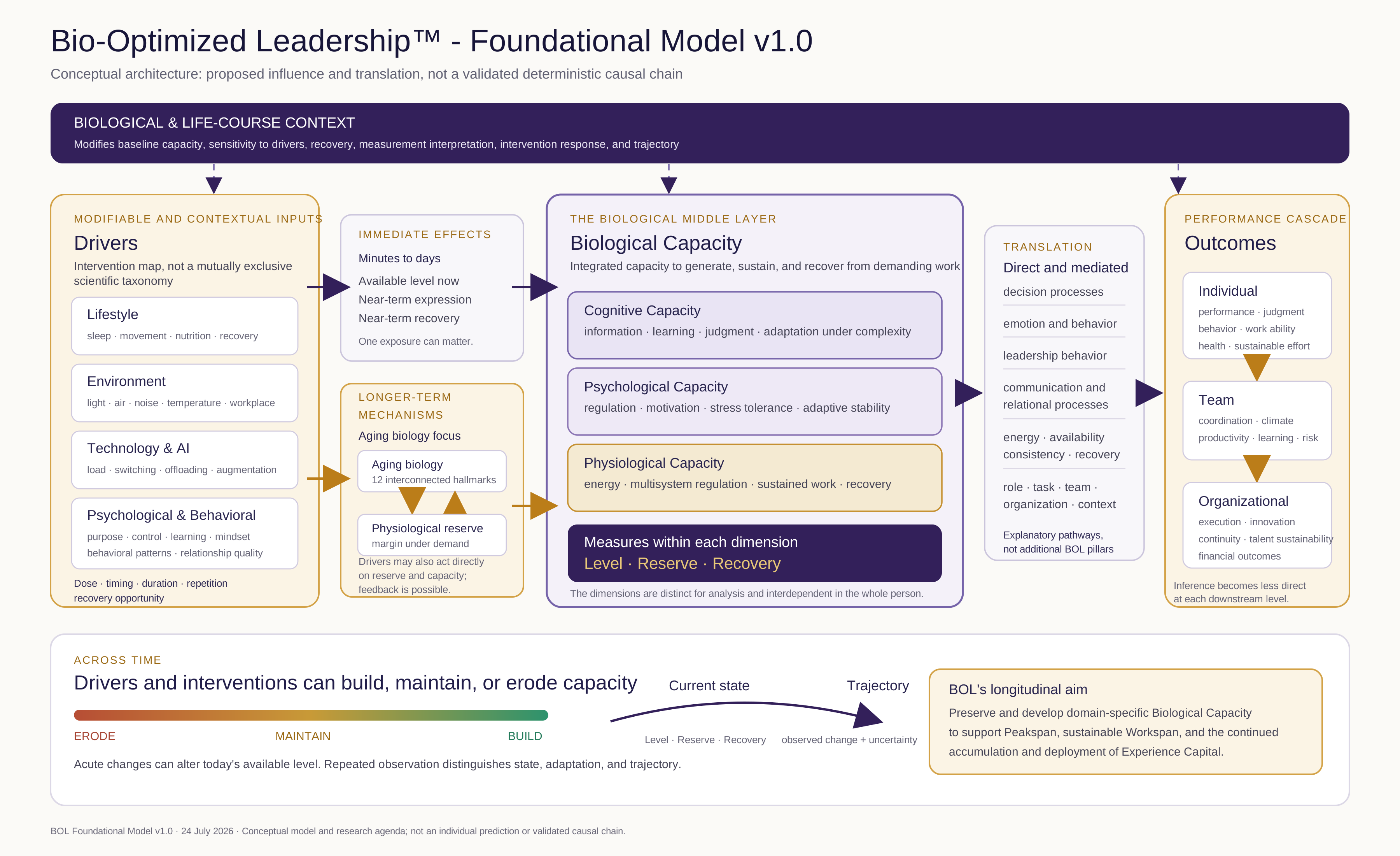
The architecture
Drivers → Biological Capacity → Outcomes
BOL treats the Biological Capacity available to leaders as a modifiable input to sustained judgment, behavior, adaptation, and performance in demanding environments. It does not reduce leadership to biology or claim that biology alone determines business results.
Four driver categories
Lifestyle, Environment, Technology & AI, and Psychological & Behavioral conditions can build, maintain, strain, or erode capacity across immediate and accumulated timescales.
Three capacity dimensions
Cognitive, Psychological, and Physiological Capacity are distinct for analysis, interdependent in the whole person, and examined through Level · Reserve · Recovery.
A mediated performance cascade
Capacity may reach individual, team, and organizational outcomes directly and through decision, behavioral, relational, role, and contextual pathways. Inference becomes less direct downstream.
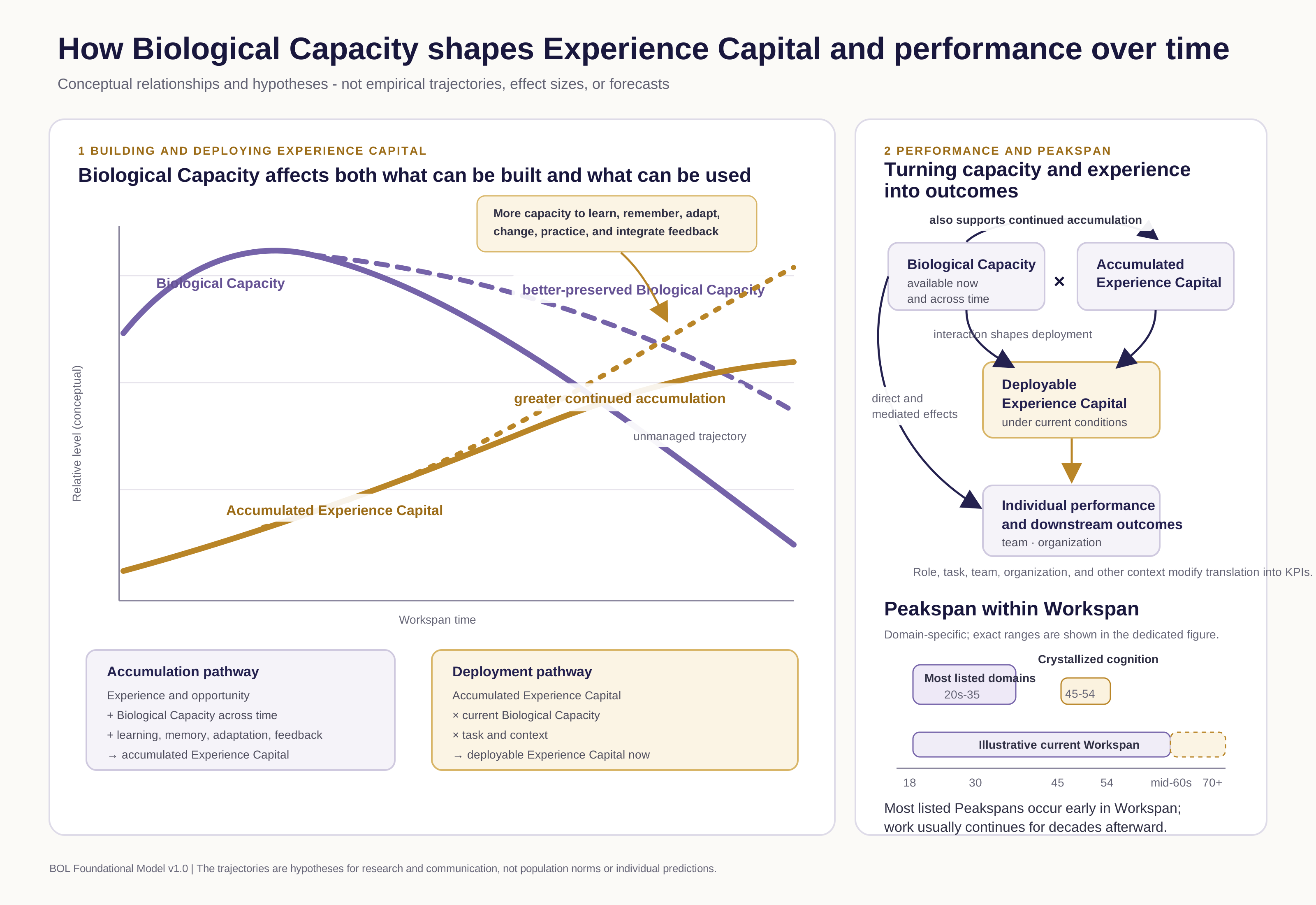
Across longer working lives
Capacity and experience are not the same asset
Experience Capital is the accumulated knowledge, pattern recognition, contextual judgment, domain expertise, and lived leadership experience built over time.
The whitepaper proposes that Biological Capacity may influence both the continued accumulation and the deployment of Experience Capital. It also proposes that preserving capacity may support domain-specific Peakspan and sustainable Workspan.
These interactions are testable BOL hypotheses, not validated intervention effects.
Evidence discipline
Every claim carries a boundary
The label belongs to the specific claim, not permanently to a source. Population, design, endpoint, comparator, and limitations remain attached to the evidence.
Established external evidence
Findings supported by a cited source within its actual population, design, endpoint, and limitations.
Evidence-supported BOL interpretation
A transparent synthesis or extension of external evidence into the BOL architecture.
BOL hypothesis
A testable relationship or effect that has not yet been established.
Future research proposition
A measure, instrument, study, or product direction proposed for development.
How to cite
Foundational Whitepaper, Version 1.0
O'Donovan, I. (2026). Bio-Optimized Leadership™: A foundational model of Biological Capacity, leadership performance, and outcomes across longer working lives (Foundational Whitepaper, Version 1.0). Bio-Optimized Leadership. https://doi.org/10.5281/zenodo.21538567
The canonical publication record is maintained through Zenodo.