Bio-Optimized Leadership™ · Bio-Optimized. Future-Ready.
Sharper Leaders.For Longer.Measurably
Bio-Optimized Leadership™ helps organizations protect the cognitive, psychological, and physiological capacity behind high-stakes decisions.
AI and other exponential technologies are accelerating change. Longevity is extending careers. The future of work is increasing leadership demands. Do your leaders have the capacity these shifts require?

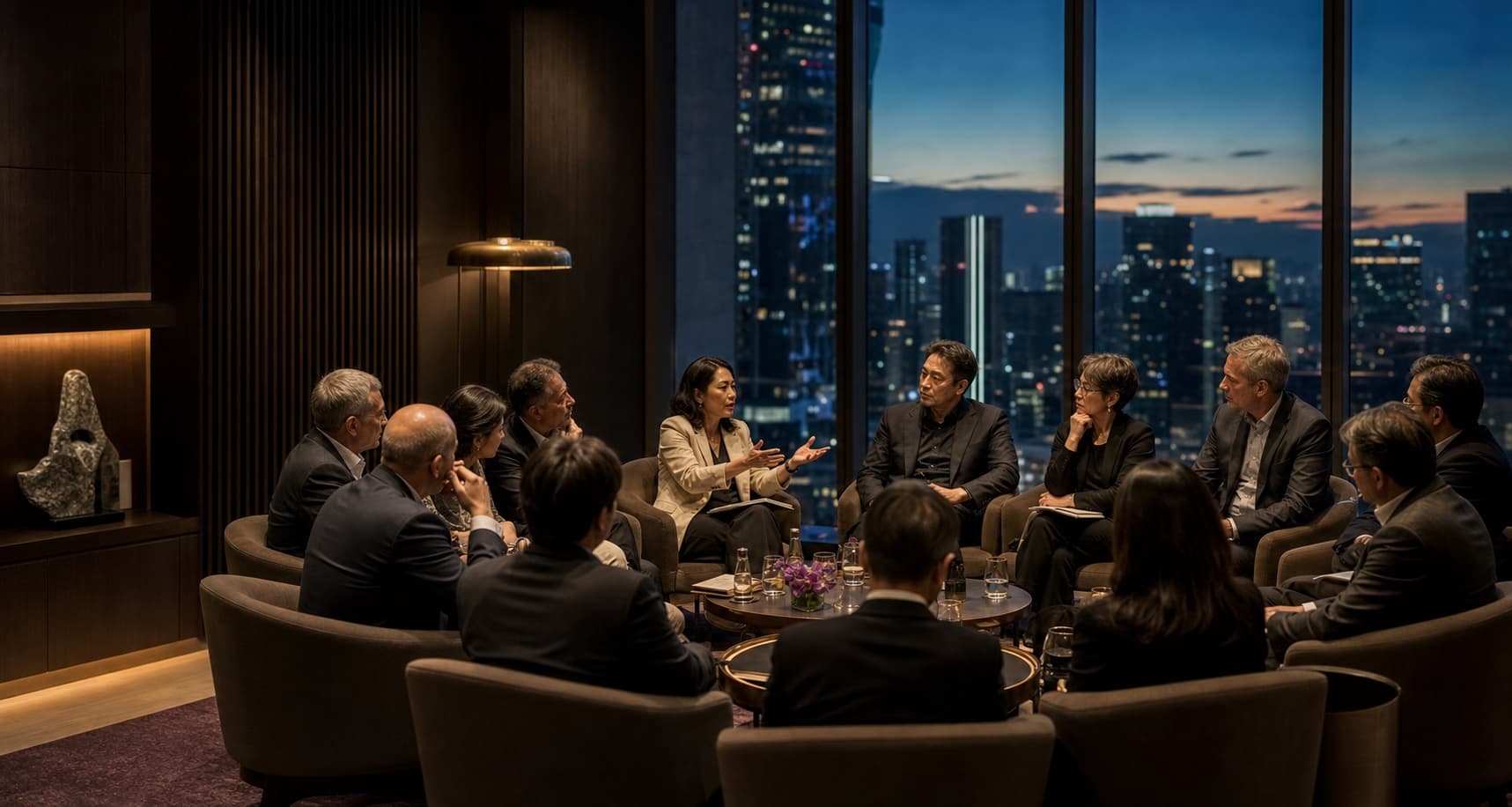
Leadership Longevity Salons · Asia · September–October 2026
Private conversations oncapacity behind better decisions
Join a small group of senior leaders in Singapore, Hong Kong, Bangkok, or Shanghai to examine Biological Capacity, leadership longevity, and the future of consequential work.
Explore the Asia SalonsWhy this matters now
5 forces changing what leadership requires
Leadership is being reshaped by five converging forces: intelligence abundance, longer careers, continuous reinvention, ambient work, and the growing ability to measure human capacity.
These are not distant trends. Each raises the demands on leadership. Together, they expose a constraint most organizations are not yet managing. They shift the bottleneck from access to technology toward the human capacity to direct it wisely.
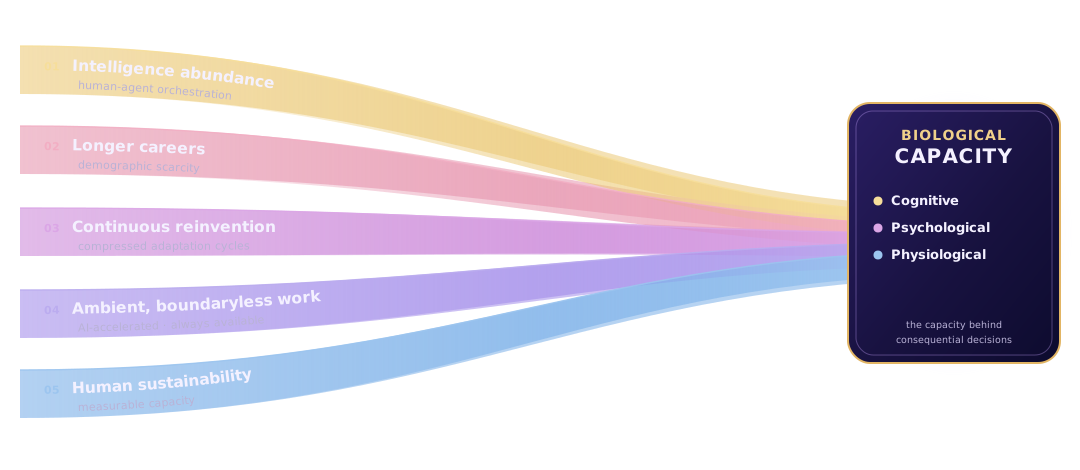
In an age of abundant intelligence, Biological Capacity becomes the scarce advantage.
01
Intelligence abundance
& human-agent orchestration
AI moves beyond assistance toward digital labor, raising the volume, speed, and complexity of work leaders must direct, verify, and stay accountable for.
02
Longer careers
& demographic scarcity
Working lives extend as expertise gets harder to replace. Experience Capital only creates value while leaders retain the capacity to use it.
03
Continuous reinvention
& compressed adaptation cycles
Roles and operating models change before the last transformation is absorbed. There is no equivalent time to recover or rebuild capacity.
04
Ambient, boundaryless work
AI-accelerated, always available
Work loses its stopping points. It expands decision density and consumes the recovery on which sustained judgment depends.
05
Human sustainability
& measurable capacity
Sleep, stress, recovery, and health risk become observable. This creates the chance to see, and the duty to govern, changes in capacity.
What makes Bio-Optimized Leadership™ different
Most leadership work starts too far downstream
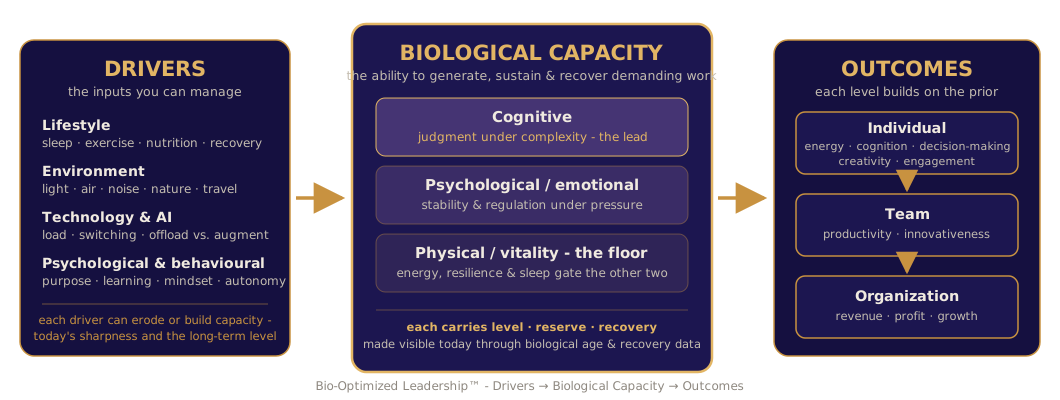
Most leadership programs work on skills. Most AI programs work on tools and processes. Most longevity programs work on personal health. Bio-Optimized Leadership™ traces the whole line instead. It moves from the drivers you can manage, through the Biological Capacity of the leaders making consequential decisions, to the outcomes it may shape.
This perspective comes from the work of Dr. Ines O'Donovan, PhD, across leadership, technology, the future of work, and longevity.
Start here
Start with the Executive Briefing
In 60–90 minutes, your senior team builds a shared view of where leadership-capacity exposure may sit, what can be examined without collecting personal health data, and which three actions are worth considering next. The engagement includes sponsor pre-work, a Leadership Capacity Exposure Map, and a debrief.
€3,000 virtual · from €5,000 in person
Who this is for
Built for the people accountable for consequential decisions
Product, innovation, revenue & strategy leaders
You evaluate which AI, insurtech, workforce, or longevity opportunities deserve investment while priorities multiply, timelines compress, and the consequences become harder to reverse. Bio-Optimized Leadership™ helps you identify when decision overload is beginning to constrain innovation, growth, and execution.
Explore this contextCEOs, founders, and leadership teams
Growth, AI adoption, or transformation still depends on the judgment and availability of a few people. Bio-Optimized Leadership™ turns that key-person exposure into a business conversation about enterprise value, the operating model, and the capacity required to execute the plan.
Explore this contextFamily offices and executive networks
Capital, continuity, and stewardship depend on sustained judgment across longer lives and leadership horizons. Bio-Optimized Leadership™ creates a trusted way to surface capacity and continuity risk without turning it into a wellness discussion or product pitch.
Explore this contextThe four ways to work with Bio-Optimized Leadership™
Four engagements. One framework. Choose the question you need answered
Who developed it
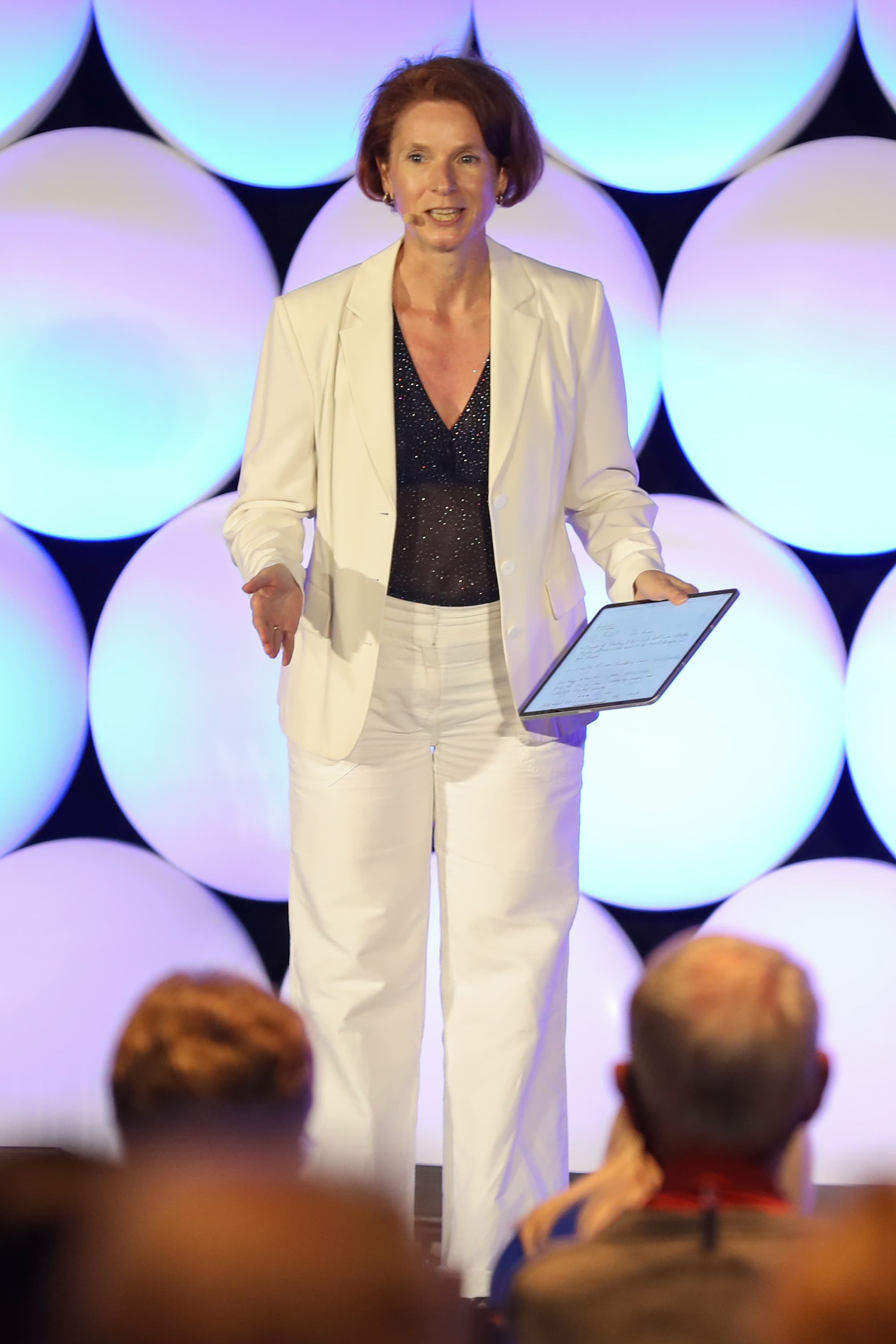
Who developed the Bio-Optimized Leadership™ model
Dr. Ines O'Donovan, PhD, is the creator of Bio-Optimized Leadership™, combining academic research, business experience, and work in longevity science. She holds a PhD in Management Learning and Leadership, an MBA in Innovation and Entrepreneurship, and a certification as an AI Longevity Futurist from Stanford.
The framework integrates leadership, organizational behavior, behavioral science, health, longevity, and technology adoption into a structured approach to leadership capacity. Developed over several years and applied with executives across Europe, it is designed to generate measurable insights and support evidence-based decisions.
While the disciplines are established, the full model is still being validated at company-outcome level through pilots, measurement, and ongoing observation.
About Ines and the origins of Bio-Optimized Leadership™The evidence, not the hype
Every claim sourced, every limit shown
Peer reviewed · 2024
Across 44 studies of healthy adults allowed only two to six hours for sleep for one night, participants became substantially sleepier and performed worse on sustained-attention tasks. The meta-analysis found no statistically significant deterioration in working memory, inhibitory control, or cognitive throughput.
Source: Wüst et al. (2024)
Boundary: The result concerns one experimentally restricted night. It does not establish persistent capacity loss, workplace-performance effects, or that complex cognition is unaffected by repeated sleep restriction.
Peer reviewed · 2015
Across 606 matched daily observations from 88 supervisors and their work units over 10 workdays, poorer reported sleep quality, but not shorter sleep duration, was indirectly associated with lower daily team engagement. The estimated pathway ran through greater leader self-control depletion and more abusive supervisory behavior reported by subordinates.
Source: Barnes et al. (2015)
Boundary: This was a multisource daily field study, not an experiment. The timing and mediation analysis support the proposed sequence but do not establish causation. The outcome was daily work-unit engagement, not team execution, financial performance, or enterprise performance, and the supervisors were not specifically C-suite executives.
Peer reviewed · 2025
The review finds that measures such as cardiorespiratory fitness, strength, gait, resilience, and frailty already have substantial human evidence linking them with morbidity and mortality. Most molecular aging clocks do not yet have comparable physiological and clinical validation.
Source: Furrer and Handschin (2025)
Boundary: This does not make molecular clocks irrelevant. It means they should be interpreted alongside direct physiological and functional measures rather than used as substitutes for them.
FAQ
Straight answers
Start with one shared view
In 60–90 minutes, identify the leadership-capacity exposure worth examining and the three next actions worth considering.
Discuss an Executive Briefing